
EA Javelin in Battlefield 6: Kernel Anti-Cheat and the Firmware It Demands
Battlefield 6 was built around a kernel anti-cheat that demands a trusted boot state. What Javelin checks, what it cannot see, and the habits that keep an account alive.
Battlefield 6 shipped with EA Javelin, EA's own kernel-level anti-cheat, and it is stricter than most. Secure Boot has been mandatory since launch. TPM 2.0 enforcement began on August 28, 2026, in Season 4. A machine without both does not play.
That is the environment a Battlefield 6 cheat has to exist in, and it explains almost everything about how the good ones are delivered.
Why kernel level, and why the firmware checks
Javelin sits below user mode, where it can inspect drivers, handles and memory reads that a normal process cannot see. Kernel access is the reason it can catch things a user-mode anti-cheat misses.
Secure Boot and TPM are not about the cheat directly. They establish that the system Javelin is inspecting booted in a trusted state, so the thing underneath has not been tampered with before Windows started. That is why the checks are firmware level and why you cannot override them.
The enforcement date is worth noting. Secure Boot from day one, TPM added four seasons later, which is a pattern of tightening rather than a one-off.
The error message problem
When Javelin fails to start, Battlefield 6 shows "SecureBoot is not enabled" whether or not Secure Boot is on. It is a generic page for a failed anti-cheat service, not a diagnostic.
That is why so many launch threads end in a Windows reinstall that fixes nothing. If you are in that hole, the troubleshooting article separates a real firmware problem from a dead service.
What it catches
- Unsigned and unsigned-adjacent drivers loading into the kernel
- Process handles and memory reads from user mode
- Injected modules
- Input patterns, which is how aim humanization gets judged rather than how it looks
- Hardware fingerprints, which is how hardware bans happen
The fingerprint one is the persistent one. It survives a format and a VPN, and it is why VAN style hardware bans are a thing here too.
Where it is weaker
It is a race. Javelin updates and cheats update against it. There is no final state, only a current one.
Kernel visibility does not cover every direction. Reads that happen outside the game process are harder to see than reads inside it. That is the entire reason DMA exists, and the reason our stack runs through Cloud DMA: reads happen in a Hyper-V environment rather than in the client.
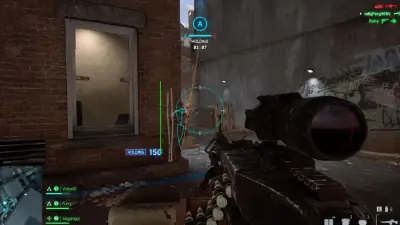
It cannot see intent. A wallhack changes nothing about your inputs. What catches one is a human noticing you pre-aim a flag approach four times.
What that means for settings
Two habits, both covered elsewhere in detail.
Keep the aimbot small. Battlefield's long sightlines make a wide FOV look worse than in a close game. Small FOV, moderate smoothing, visible check on.
Do not stack modules you do not use. Every layer is surface area.
Risk, stated honestly
Our listing says undetected and updates after patches. Both are true as descriptions of maintenance. Neither is a promise about next Tuesday.
Practical rules:
- Check the changelog before you play after a patch
- Do not queue on a stale loader
- Do not play six hours a day every day on one account
- Do not run a free build beside a paid one
If a ban lands
Account bans are cheap. Hardware bans follow the machine, and a fresh account on the same PC gets taken within a match or two.
Our spoofer rewrites disk serials, MAC addresses, GPU IDs and related identifiers, with a cleaner included. Order: close the game, clean, spoof, reboot, verify, launch on a clean account. It needs HVCI, Core Isolation, TPM and Secure Boot, plus Cloud DMA for full functionality.
The short version
Javelin plus enforced firmware checks raised the bar toward delivery that keeps reads out of the game process. It did not end cheating in Battlefield 6. It ended the era where a random overlay was good enough.